
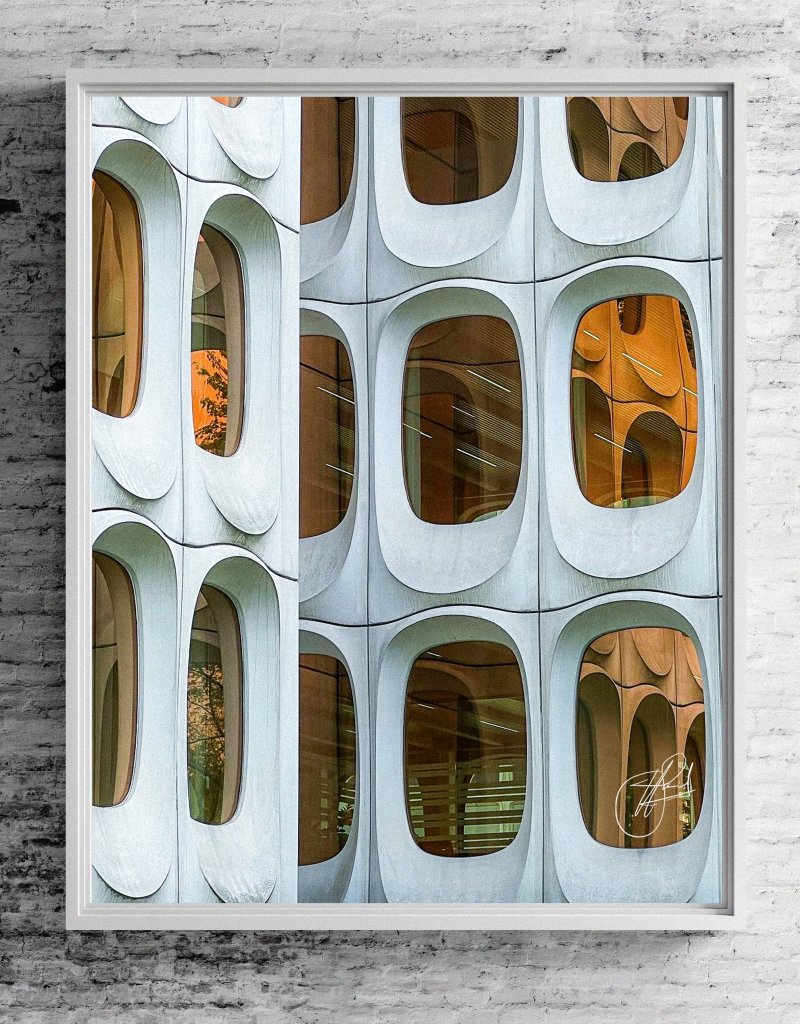

Architecture Photography: Ulysses Saniel
Purchase Print: Store
http://www.byulysses.com
About the building:
The Constantin Brodzki building, located in the city of Brussels, is a masterpiece of architectural design and innovation. It was designed by the Belgian architect Constantin Brodzki in the 1970s, and is considered to be one of the most iconic buildings in the city.
The building is known for its unique style, which combines elements of brutalism, minimalism, and modernism. It is made up of a series of concrete cylinders that are stacked on top of each other, creating a dynamic and visually striking structure. The building’s exterior is characterized by its rough concrete texture and its unusual shape, which makes it stand out from the surrounding buildings.
Inside, the building features a spacious and open design that emphasizes natural light and the use of space. The interior is dominated by a large central staircase, which spirals upwards through the building and connects the various floors. The staircase is made up of thin metal sheets, which are bent and shaped to create a unique, sculptural effect.
One of the most interesting aspects of the Constantin Brodzki building is the way it plays with light and shadow. The concrete cylinders that make up the building’s structure are perforated with small circular openings, which allow light to filter through and create a dynamic interplay of light and shadow throughout the interior.
The building was designed to serve as the headquarters of an insurance company, and its design reflects the company’s values of transparency and openness. It was built at a time when Brutalism was becoming popular in architecture, but Brodzki’s unique approach to the style set it apart from other Brutalist buildings of the time.
Today, the Constantin Brodzki building is recognized as an architectural masterpiece, and is considered to be a landmark of modernist architecture in Brussels. Its unique design and innovative use of materials have inspired architects and designers around the world, and it continues to be a source of inspiration for those interested in modernist design and architecture.
 RAW blog : Behind the scenes of Photographer/Creative Designer Ulysses Saniel